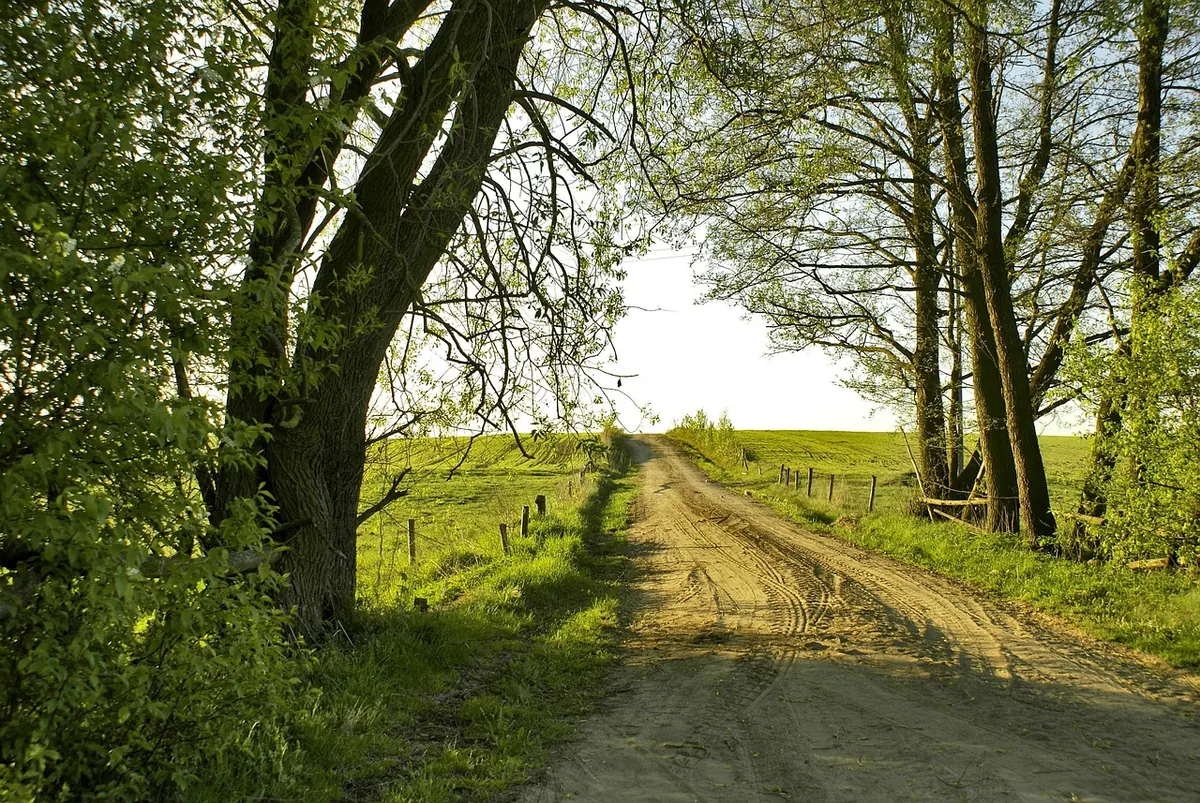
Countryside vs. City Living: A Realistic Comparison for Slow-Living Movers
Most moves to the countryside begin with a photograph: a stone house, a view, a kitchen table in morning light. What the photograph doesn't show is the Tuesday three months later, when the boiler has stopped, the nearest plumber is booked until next week, and the car is the only way to get anywhere.
That isn't a reason to stay put. It is a reason to compare the two lives honestly, line by line, before you pack the van. What follows isn't a pitch for either side. It's an attempt to describe how a city day and a country day actually differ — in routine, in money, in services, and in the people you end up knowing.
The Shape of an Ordinary Day
In a city, errands dissolve into the day. You leave the flat, buy bread, post a parcel, pick up a prescription, meet someone for coffee, and you're home within the hour without ever planning it. The density does the work for you. Ten minutes in the wrong direction costs you almost nothing.
The countryside runs on a different logic: the loop. You learn to think in circuits — the market circuit, the hardware shop circuit, the station circuit — and to batch everything into one outing that might take two hours and cover thirty kilometres. The upside is that you stop making pointless trips; the downside is that forgetting the milk means getting back in the car.
Mornings change too. Country mornings are noisy in a way city people don't expect — birds, a tractor, a dog three gardens over — and then very quiet from about nine. Evenings are darker, earlier, and genuinely dark. If you've never spent a winter night somewhere without streetlights, it's worth experiencing before you decide you'll love it. Some people find it restful. Others find it unnerving, and there's no way of knowing which you are until you've tried it.
What It Really Costs
Housing is where the arithmetic usually works. The same budget generally buys more space, more land, or both, and that single fact drives most moves. It is also where people underestimate what comes next.
The costs that are easy to see
- Rent or mortgage, usually lower per square metre than in the city.
- Council or local property taxes, often lower, sometimes not by as much as you expect.
- Groceries, which can go either way: cheaper at the market, pricier at the small village shop.
The costs that surprise people
- Two cars, not one. Public transport thins out fast, and a second vehicle stops being a luxury and becomes a line in the budget: fuel, insurance, tyres, servicing.
- Heating. Older country houses are often larger, less insulated and harder to keep warm. Wood stoves help, but wood costs money and time.
- Systems you've never thought about. A septic tank that needs emptying, a private well, a boiler that runs on LPG, a roof that will eventually need attention.
- Travel surcharges. Tradespeople who drive forty minutes to reach you may charge for the drive. It's fair, and it adds up.
- Delivery and repairs. Some couriers won't come up the last kilometre; some technicians won't either.
Before committing, build a twelve-month budget rather than a monthly one. Heating arrives in a lump, wood arrives in a lump, car repairs arrive without warning. Anything involving mortgages, local taxes or renovation contracts deserves a conversation with a qualified local professional — the details vary by region and change more often than online guides do.
Errand Math and the Service Gap
Distance is the thing people consistently under-weight, because it hides in small numbers. Ten minutes each way is twenty minutes. Do that three times a day and you've spent an hour driving — the hour you imagined you'd spend reading on the terrace.
None of this is a problem once it's a habit. It becomes a problem when you expect the city's convenience in a place that can't offer it. The practical fix is to treat distance as a plan, not an obstacle:
- Keep a running list on the kitchen wall and shop from it once or twice a week.
- Group errands by direction, not by urgency.
- Know your fallbacks: the pharmacy with longer hours one town over, the supermarket that opens on Sunday morning.
Services are the other gap. Healthcare, schools, banks and post offices are thinner on the ground, and some small branches keep hours that assume nobody has a job. Check the specific things you rely on now — a dentist, a paediatrician, a train that gets you to the city by nine — and check them at the level of the exact address, not the general area. Broadband is the classic example: test the connection in the house yourself, on your own phone, and ask to see the actual contract rather than accepting a reassuring sentence.
Fewer People, Deeper Threads
City social life is wide and shallow, and that's not a criticism. There are dozens of people you could call for a drink, and the cost of any one relationship falling away is low. Anonymity is a real luxury: nobody notices your bad week, and there's always something open at nine in the evening.
Country social life is narrow and deep, and it takes longer to enter than newcomers expect. You will be noticed. That can feel warm or intrusive depending on the day and the neighbour, but it is the same mechanism that produces a village where someone will drive you to the hospital at four in the morning.
What actually works is showing up repeatedly, without an agenda. Join the things that exist — the choir, the volunteer group, the allotment committee, the parish clean-up, the Saturday market stall — and keep going through the first awkward months. Expect a year before you're more than the new arrivals, and two before you're simply neighbours.
A practical test: after six months, can you name five people within a ten-minute drive you could call in an emergency? If not, the routine needs adjusting, not the location.
Be honest about the trade, too. Spontaneous dinners become planned dinners. A late concert means a long drive home, or a hotel room. Those small frictions matter more than they sound in a list.
Rehearse It Before You Commit
- Visit in the worst month. Not the pretty one. February rain tells you more than June sunshine.
- Spend a weekday there. Weekends lie; weekdays show you buses, opening hours and how empty the place is at eleven in the morning.
- Run the real loop. Do the actual errands you'd do in a normal week, at normal times, in your own car.
- Test the house, not the area. Phone signal in the kitchen, water pressure in the shower, heating on a cold evening.
- Knock on two doors. Ask the neighbours what the winters are like and who they call when the boiler breaks.
- Rent first if you can. One full year in the area before you buy will save you from most expensive mistakes.
If You Go: The First Year
Keep a buffer in the budget for the unglamorous surprises — the pump, the roof, the second-hand car. Don't start the big renovation in month one; live in the house through a full set of seasons first, and you'll make better decisions about what actually needs changing.
Say yes to invitations in the first six months, even the dull ones. Learn the name of the person at the hardware shop, and take their advice. Aim for a rhythm rather than a lifestyle: one market day, one evening out, one morning set aside for the long list of things that need a drive.
And keep one anchor to the city you left — a friend you visit monthly, a course, a concert season. Slow living works best when it's chosen from a position of connection, not isolation. Give it two years before you judge the move. Most of what feels strange in the first season feels normal by the third, and that's exactly when people realise the quiet was never the problem.
Photo: DagMary / Pixabay

How to Create a Pollinator-Friendly Wildflower Patch in a Country Garden
A practical guide to planning, preparing, sowing and tending a wildflower patch that feeds bees and...

Understanding Rural Waste and Recycling in Italy: A Practical Explainer
A practical guide to rural waste in Italy: how local collection works, what goes in each bin, using the...
About Us